Krav Maga gives families a shared, practical plan for safety that actually holds up outside the gym.
Families in Lindale want the same thing at the end of the day: practical safety, not a hobby that stays in a classroom. That is one reason krav maga has become such a strong fit for households that want skills that work under stress, in everyday clothes, and in everyday places like parking lots, front porches, and store aisles.
We also know access matters. Nationally, only about 2 percent of U.S. gyms offer this kind of training, so finding structured, real-world self-defense locally can feel like chasing a unicorn. Our goal is to make that rare access feel normal here, with a program that welcomes parents, teens, and kids into a shared learning path.
Just as important, families want training that is effective without being reckless. A 2023 to 2024 study of 109 practitioners found injury rates rose with high-intensity training, with many injuries being acute and often affecting the torso and lower limbs. That aligns with what we see in the real world: intensity is a dial, and when we set it appropriately for families and beginners, we can build capability while reducing unnecessary risk.
Why Family Self-Defense Needs a Different Kind of Martial Art
Self-defense for a family is not just about who can fight. It is about who can notice problems earlier, make smart decisions faster, and act decisively when avoidance fails. A family program has to develop a shared language: where to stand, what to say, when to leave, and how to protect the most vulnerable person in the group.
We build training around that reality. Your teen might need boundary-setting and escape skills. You might need simple, high-percentage responses to grabs or aggressive contact. Kids need age-appropriate movement, awareness, and the confidence to seek help without freezing. When we teach all of that under one roof, families stop feeling like safety is a mystery and start treating it like a skillset.
What Makes Krav Maga Different for Real-World Situations
Krav maga was developed for military contexts and later adapted for civilians, which shows up in the way it prioritizes problem-solving over performance. The goal is not to win points. The goal is to get safe. That sounds simple, but it changes everything about training choices: posture, movement, decision-making, and how we practice under pressure.
It prioritizes high-probability problems
Real incidents are messy. People get grabbed, shoved, cornered, or threatened with objects. Our approach emphasizes responses to common attacks that do not require you to be an athlete or a lifelong martial artist. You learn what to do when your heart rate spikes, your hands shake a little, and you still have to act.
It supports faster family alignment
Families often train with mixed ages and mixed fitness levels. Because krav maga focuses on direct, efficient mechanics, we can scale the same core idea across different bodies. A parent and a teen can work the same concept with different intensity and complexity, and that shared understanding is powerful.
It strengthens awareness, not just technique
Techniques are part of the picture, but awareness is what prevents many problems from becoming physical. We build habits like scanning, managing distance, and using your voice clearly. Those are skills you can practice in daily life without anyone knowing you are practicing.
Why This Matters Specifically in Lindale
Lindale sits near Tyler in East Texas, and many families here live a blend of small-town routines and bigger-area travel. That means your real-world safety concerns can shift depending on where you are: quiet roads, busy stores, school events, or parking lots after dark.
Dedicated self-defense options can also be limited in rural areas, and that gap matters. When local access is scarce, families either do nothing or try to piece together information online. Neither approach builds calm, repeatable skill under stress. We built our training to be a local, reliable place where you can show up consistently and build capability over time, not just read about it.
What Families Actually Learn in Our Program
When people hear krav maga, they sometimes imagine nonstop intensity. Real family progress looks different. You build a base first, then add complexity. You practice slowly, then faster. You learn how to keep your balance, how to protect your head, and how to move someone you love out of danger.
Here are the core categories we emphasize for family self-defense:
• Situational awareness skills that help you recognize early warning signs and choose safer routes, exits, and spacing
• Boundary setting and de-escalation language that feels natural in Lindale life, not scripted, and still clear under stress
• Escapes from common grabs and holds, focusing on leverage, timing, and simple movements you can repeat reliably
• Striking fundamentals designed for self-defense contexts, with controlled intensity and attention to safety
• Ground survival basics so you understand how to protect yourself, create space, and get back up quickly
• Family movement concepts like staying together, assigning roles, and moving children behind an adult during a threat
That mix is what makes a family program feel practical. You are not just learning to fight. You are learning to manage a situation.
Safety First: How We Keep Training Effective Without Unnecessary Risk
A common question we hear is whether krav maga is safe for families and kids. The honest answer is that safety depends on how training is structured. Research on practitioners shows higher injury rates when training becomes high-intensity and high-volume, and many injuries are acute. That is not a surprise if intensity is treated like the main goal.
Our priority is sustainable training. We emphasize technical precision, controlled resistance, and progressive intensity. You should leave class feeling challenged and a little sweaty, not broken down.
How we reduce risk while building real capability
We use a few consistent principles:
1. We scale intensity to the student, not the other way around, so beginners and family students build skill before speed.
2. We teach proper movement mechanics early, including how to fall, how to stabilize joints, and how to protect the head.
3. We build strength and resilience with targeted warmups and conditioning that support knees, hips, and core stability.
4. We keep partner work respectful and structured, with clear coaching on control and communication.
That last point matters more than many people expect. A safe room is a room where people can say, “Hey, slower,” and it is normal. Families especially need that.
Time, Consistency, and Cost: What to Expect in Lindale
Most people do not need to train every day to benefit. Consistency beats intensity. Many families do well with a steady weekly rhythm, especially when schedules include school sports, work travel, church events, and everything else Lindale life can throw at a calendar.
Nationally, many martial arts memberships average around $150 per month. We know budgets matter, especially as households become more careful with discretionary spending. That is why we emphasize clear value: practical skills, structured progression, and options that make it realistic for families to stay consistent.
If you are curious about what fits your household, the class schedule is the place to start. You can look at available times and choose something you can actually keep, not something that only works in a perfect week.
Why Families Train Together and Why It Works
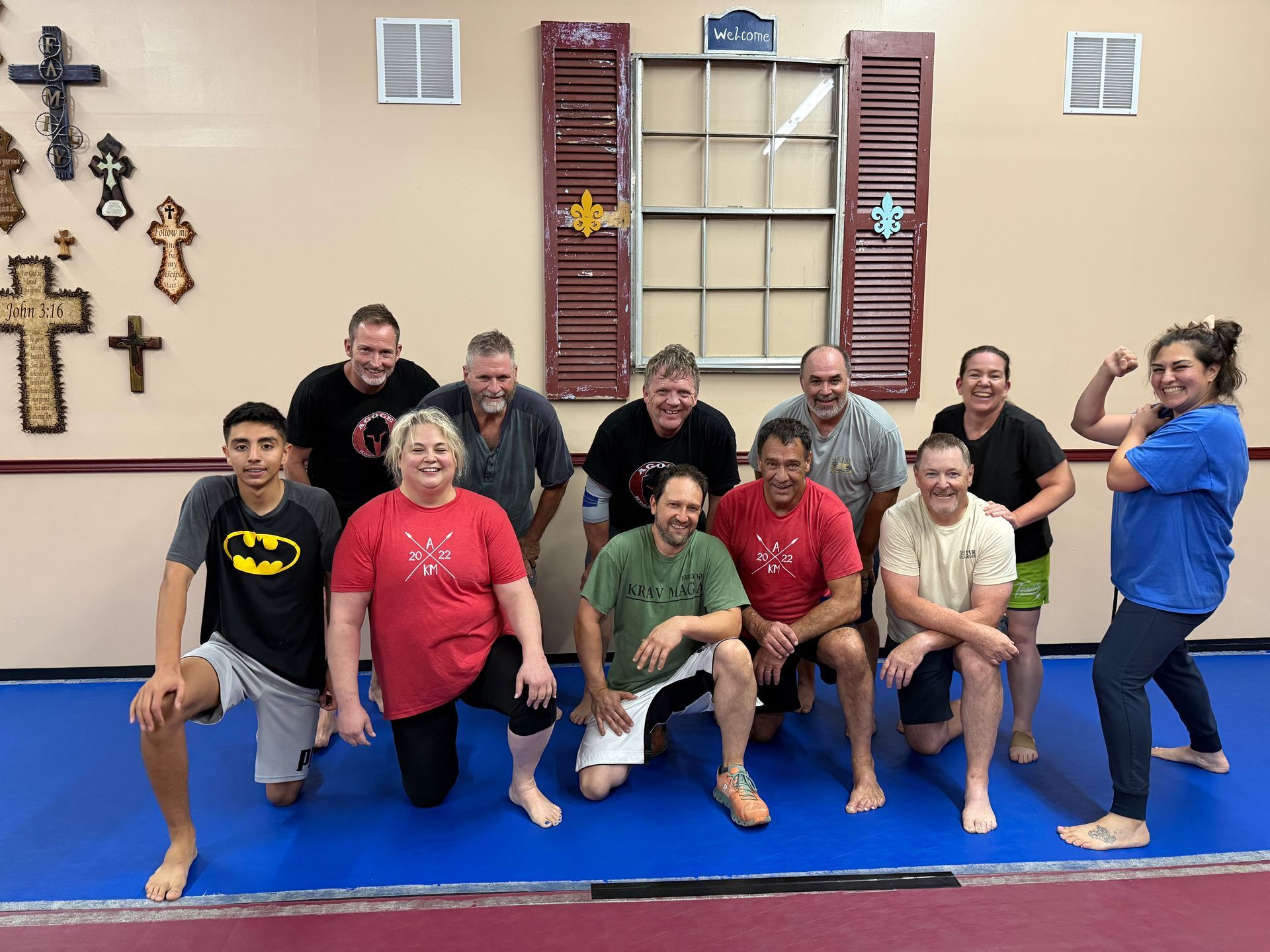
A big trend in martial arts is family participation. About 40 percent of participants are under 18, and more families are training side by side. We also see women’s participation rising to around 30 percent, which matters because self-defense should not be treated like a niche interest. It is a life skill.
When families train together, good things happen:
• Kids take cues from parents about calm behavior under stress.
• Parents get to practice communication and protective positioning in a controlled environment.
• Teens gain confidence without having to pretend they are fearless.
• Everyone shares a baseline plan for what to do if something feels wrong.
And yes, it builds fitness. Many teen martial artists report health benefits from training, and adults often notice improved stamina, coordination, and stress management. The nice surprise is that you gain those benefits while practicing skills that have a purpose.
What a First Class Feels Like (So You Can Walk In Calm)
The first class should feel welcoming, clear, and structured. We guide you through fundamentals and set expectations early: safety, respect, and steady progress. You do not need to be in shape before you start. Training is how you get there.
Expect a warmup that prepares joints and movement, technique instruction with coaching, and controlled drills that help your body understand the skill, not just your brain. You might feel awkward for a moment. That is normal. Most people do. Then it clicks, usually faster than expected.
If you are bringing a teen or child, we keep the focus age-appropriate and confidence-building. If you are returning to training after years away, we ease you in with a pace that supports long-term progress.
Ready to Train as a Family in Lindale
Building real self-defense skill is not about collecting techniques. It is about practicing the right things, at the right intensity, with a plan you can sustain. That is what we deliver every week, with a clear pathway for beginners and a training culture that keeps families learning safely.
At Agoge Krav Maga, we designed our krav maga in Lindale programs to meet families where life actually happens: busy schedules, mixed ages, and a real desire to feel capable without turning training into a second job. If you are ready for krav maga training in Lindale that stays practical, progressive, and grounded, we would be glad to help you start.
Train alongside others who are committed to personal growth and real-world defense by claiming your free Krav Maga trial class.