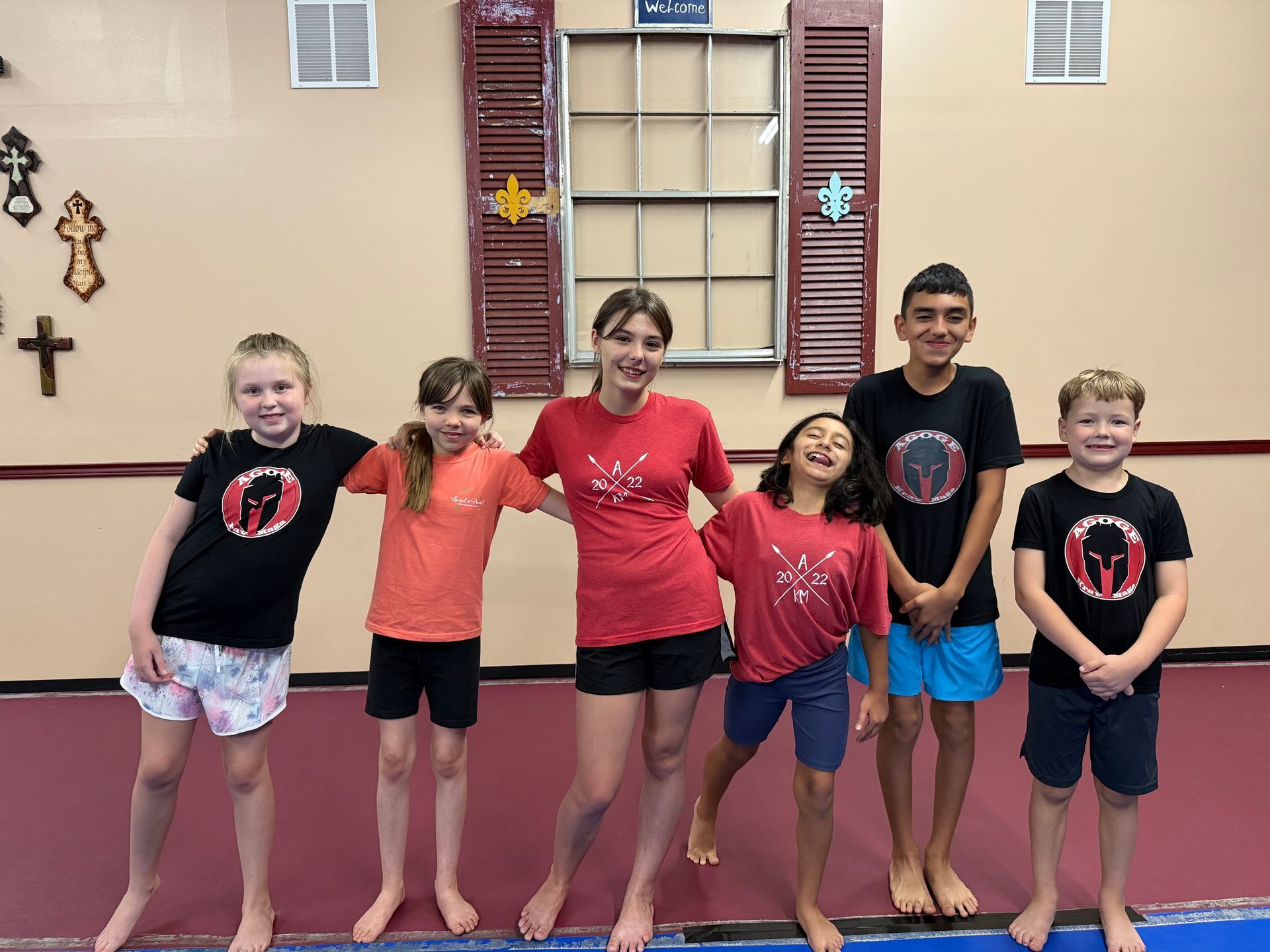
Krav Maga gives teens a practical way to feel steadier, stronger, and harder to shake when life gets loud.
Teen years can feel like a moving target, even in a close community like Lindale. School pressure, social dynamics, sports, jobs, and constant notifications all compete for attention, and it is easy for stress to pile up quietly. In our teen program, we use krav maga as a structured outlet where you can build real skills while also building the kind of confidence that shows up in everyday decisions.
We also understand what parents are looking for: a place that is disciplined but not intimidating, challenging but safe, and serious about personal responsibility. Krav maga fits that balance well because it is designed for practical self-defense, and our classes keep progress measurable. You can feel improvement week to week, which matters a lot when everything else in life feels like it changes overnight.
This article breaks down how our teen-focused training works, what your teen can expect in class, and why krav maga training in Lindale can become a steady anchor for confidence, resilience, and healthy habits.
Why Krav Maga Works Especially Well for Teens
Krav maga is straightforward by design. Instead of relying on complicated choreography, it emphasizes practical movements, simple principles, and repeatable responses under stress. For teens, that simplicity is a strength because it reduces overthinking and helps skills stick when adrenaline spikes.
Another reason it works well is that our training blends physical and mental skill-building in the same hour. Yes, you learn strikes, defenses, and movement, but you also practice decision-making: when to disengage, when to create distance, how to use your voice, and how to spot trouble early. That blend is what helps teens carry the benefits outside the gym and into school hallways, parking lots, and everyday routines.
Finally, the training environment matters. We keep classes structured and coachable, with clear expectations around respect, effort, and safety. That consistency helps teens relax enough to learn, and then push hard once they know the rules and boundaries.
Confidence You Can See (And Not Just in a Gym)
Confidence is often talked about like a personality trait, but we see it as a skill. In our classes, you earn confidence by doing hard things in a controlled setting: learning technique, practicing it with a partner, getting feedback, and repeating until it feels natural.
Teens usually notice the change first in small moments. Posture improves. Eye contact gets easier. Nervous energy turns into focused energy. And there is a practical comfort that comes from knowing, “If something weird happens, I have options.” That is not bravado. It is steadiness.
Parents tend to notice confidence in different ways: fewer emotional blow-ups after a rough day, more willingness to try new things, and a stronger ability to say no to situations that do not feel right. Krav maga supports that because it reinforces boundaries, assertiveness, and calm under pressure, which are useful even when there is no physical threat at all.
Resilience and Stress Management: The Hidden Benefit
Physical training is one of the simplest ways to reduce stress, and teens need that outlet. Hard rounds on pads, focused drilling, and movement-based conditioning create a clean mental reset. You walk in carrying the day, and you walk out lighter.
We also teach resilience in the way we coach discomfort. You learn that feeling tired is not the same as being done. You learn how to breathe while moving. You learn how to keep your mind clear while your heart rate is up. Those lessons transfer directly into test anxiety, sports performance, and social pressure.
Krav maga also gives teens a safe place to practice emotional regulation. When a drill gets intense, we coach you through it. When something feels frustrating, we show you how to break it down and improve instead of shutting down. That is resilience in real time, not a motivational quote.
What Teens Learn in Our Krav Maga Classes
Our teen curriculum stays practical and age-appropriate, with safety built into how we structure partner work. We teach skills progressively so students build a solid base before pressure increases.
Here are some core areas we focus on:
• Striking fundamentals, including punches, palm strikes, elbows, knees, and basic kicks, taught with control and good mechanics
• Defensive movement, such as managing distance, angling, and getting off the line instead of freezing in place
• Common self-defense scenarios, including grabs and holds, with an emphasis on escaping and creating space
• Situational awareness, including scanning, identifying exits, and recognizing early warning signs before trouble escalates
• Verbal boundaries and de-escalation, because smart choices and strong communication prevent most problems
This is one reason parents like our approach to krav maga classes Lindale: it is not just about fighting. It is about prevention, decision-making, and responsible confidence.
Safety, Structure, and the Way We Coach Teens
Teens need challenge, but they also need guardrails. We keep training safe through clear expectations, supervised partner drills, and a pace that matches the group’s experience level. No one gets thrown into the deep end on day one.
We also coach teens like teens, not like little adults and not like little kids. That means we correct technique directly, we set performance standards, and we also leave room for growth and awkward learning moments. Some days you feel sharp. Some days you feel clunky. Both are normal.
If you are a parent reading this, it helps to know what “good training culture” looks like. In our space, respect is not optional. Partners are there to help you learn, not to “win” a drill. When teens buy into that, confidence grows without ego, which is honestly the goal.
Real-World Awareness: The Skill That Changes Everything
Many teens assume danger looks obvious. In reality, most bad situations start with small signals: someone closing distance too fast, a group blocking a path, a stranger asking for help in a strange way, or a conversation that keeps pushing past “no.”
We train awareness as a habit. That includes learning how to keep your head up, how to avoid getting trapped in corners, how to trust your instincts without panicking, and how to leave early rather than argue. Krav maga is famous for practical techniques, but the practical mindset is just as important.
When teens start practicing awareness, parents often say they seem more “present” in public. That is a big deal, especially for a generation that has grown up with screens pulling attention in every direction.
How Progress Works in Our Teen Program
Teens stay motivated when progress is visible. We use a structured approach so students know what to work on and what comes next. You do not have to guess whether you are improving. You can feel it in your coordination, your conditioning, and your decision-making speed.
A typical progression in our program looks like this:
1. Build a foundation with stance, movement, basic strikes, and safe partner drilling
2. Add defenses for common attacks while reinforcing awareness and boundary-setting
3. Increase intensity gradually with timed rounds, pad work, and scenario-style drills
4. Improve composure under pressure, using breathing, positioning, and repetition
5. Continue developing fitness, consistency, and leadership within the teen group
That progression matters because resilience is built through consistency. One great class is nice. A month of steady training changes posture, mood, and self-belief. A year of training changes how you carry yourself in the world.
Fitness Without the “Gym Vibe”
A lot of teens do not love traditional workouts. Some feel self-conscious. Some get bored. Some are athletic but hate lifting in a crowded room. Krav maga solves that because the conditioning is built into skill training. You are moving for a purpose.
Our classes naturally develop strength, coordination, and endurance through drills that keep your brain engaged. Instead of counting reps in silence, you are working combinations, improving footwork, and learning how to keep your balance while tired. That creates fitness that feels useful, not just exhausting.
And yes, teens sweat. A lot. But it is the good kind of tired, the kind that helps sleep later and makes the next day feel a little more manageable.
Social Confidence and Healthy Peer Connection
Teens do not just need confidence in confrontation. They need confidence in conversation, teamwork, and belonging. Group training helps because it creates a shared challenge. You work with partners, you learn to give and receive feedback, and you realize you are not the only one trying to figure things out.
We see friendships form naturally because students are solving problems together. That kind of connection is different than just hanging out. It is built on trust, effort, and mutual respect. Over time, teens often become more comfortable speaking up, asking questions, and taking up space in a healthy way.
That social growth is one of the quieter benefits of krav maga, and it is one of the reasons families stick with it.
What to Expect in a First Class
Starting something new can be intimidating, so we keep the first experience simple and welcoming. You will get an introduction to the training format, basic movement, and a few foundational techniques, with plenty of coaching along the way.
Your teen does not need to be in perfect shape to start. Training is what builds conditioning. The main requirement is a willingness to try, listen, and stay engaged for the full class. We handle the rest, step by step.
If you are trying to decide whether krav maga training in Lindale is a fit, the best signal is how your teen feels after class: a little tired, a little proud, and usually surprised by how much they enjoyed the challenge.
Take the Next Step
Building confidence and resilience is not about flipping a switch. It is about putting teens in an environment where effort is rewarded, safety is taken seriously, and progress is clear. That is the standard we hold in every teen class, because this age is too important for training that feels random or performative.
If you are ready to explore what teen-focused training looks like in a real, supportive setting, we would love to meet you. At Agoge Krav Maga, our goal is to help Lindale teens develop practical skills, calm confidence, and the kind of resilience that shows up everywhere, not just on the mat.
See what practical self-defense training feels like by signing up for your free trial class at Agoge Krav Maga.