Krav maga is one of the fastest ways to go from curious to capable, even if you have never trained before.
If you have been searching for krav maga in Lindale, you have probably noticed something interesting: it is not everywhere. Only a small slice of gyms in the U.S. offer it, even though more than 500,000 Americans have trained in it. That rarity matters because it usually means you are looking for something practical, not a sport, and you want training that gets to the point.
We built our program for real life in East Texas. Lindale is small, and that is part of the charm, but it also means you may be a little farther from help, parking lots are darker, and you run errands with your guard down because everything feels familiar. Krav maga is designed for exactly those everyday moments, and we teach it in a way that beginners can absorb quickly.
In this guide, we will walk you through the exact steps to start training with us, what to expect in your first few classes, what gear you actually need, and how to stick with it long enough to feel the difference in your body and your confidence.
Step 1: Understand what krav maga is and what it is not
Krav maga was developed for the Israeli military, and the training mindset reflects that. We focus on simple movements under stress, fast learning curves, and high percentage responses to common attacks. You are not memorizing forms to perform for a score. You are building reflexes you can rely on when your heart rate spikes.
Because it is a self-defense system, we train for messy situations: close range, surprise angles, uneven footing, and the possibility of more than one attacker. We also address modern threats like blunt objects and edged weapons, with safety and control scaled to your level. There is no ego in that, just preparation.
If you are worried you need to be athletic to start, you do not. We coach technique first, then intensity. Fitness improves along the way, but it is not a prerequisite.
Step 2: Set a clear goal before your first class
Most people come in with one of three goals: self-defense, fitness, or both. The more specific you are, the easier it is for us to guide you. A goal can be simple, like wanting to feel comfortable walking to your car at night, or wanting a workout that also teaches practical skills.
A helpful way to frame it is to pick one primary outcome for your first month:
- Learn the core stance, movement, and basic strikes without feeling lost
- Build enough conditioning to finish class strong instead of fading halfway
- Practice common self-defense situations with calm decision-making
We will still teach the full beginner foundation, but that one chosen outcome gives you something to measure. Progress feels real when you can name it.
Step 3: Use the website to check the program details and class schedule
Before you show up, spend a few minutes on the website to get familiar with the program layout and the class schedule. This is where you will see what times fit your life and how we structure beginner-friendly training so you are not thrown into the deep end.
If you are in Lindale and you also commute or spend time in Tyler, that flexibility helps. We see plenty of students who train after work, between family commitments, or on a steady two-days-per-week plan. Consistency beats intensity here, especially at the start.
If you want the shortest path to feeling capable, plan for two classes per week for your first month. One class per week works, but your brain and body learn faster with repeat exposure.
Step 4: Start with a trial class and show up a little early
Your first class should feel welcoming, not chaotic. Arrive about 10 to 15 minutes early so we can get you oriented, answer quick questions, and make sure you know where to put your stuff and how class will run. That small buffer lowers stress, and it makes a difference once warmups begin.
You do not need fancy gear for the first session. Wear comfortable workout clothes, bring water, and show up ready to learn. If you have old boxing gloves or a mouthguard, you can bring them, but it is not required on day one.
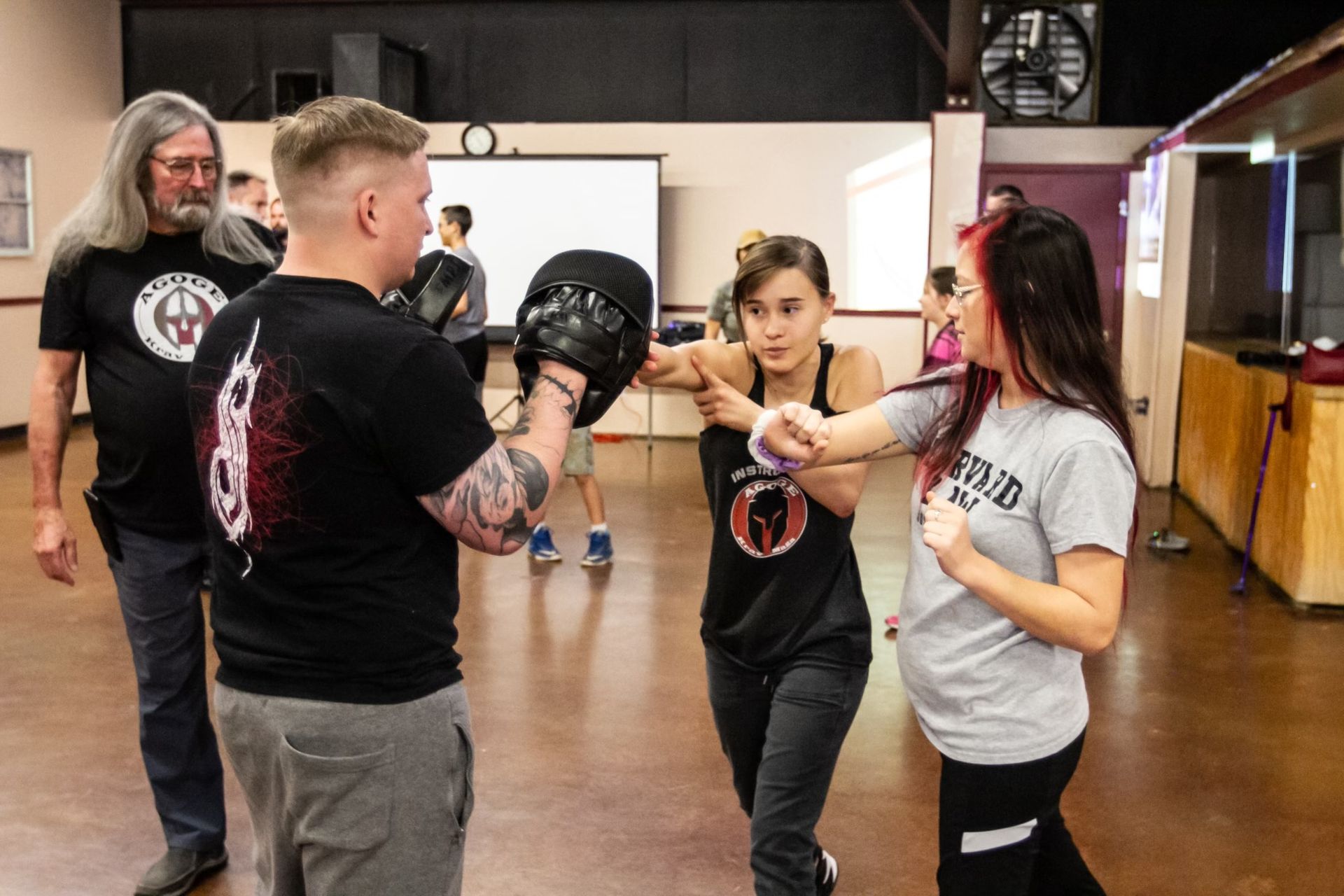
What you will notice right away is that we keep things practical. The drills are structured, the instruction is direct, and we focus on safe training habits from the start so you can build skill without feeling beat up.
Step 5: Learn the beginner fundamentals that make everything else work
In the first several classes, we focus on foundations that apply to every technique you learn later. This is where you build good habits, not just cool moves. Expect repetition, coaching, and small corrections that suddenly make your strikes feel cleaner and your movement feel more stable.
Here is what most beginners work on early:
- Stance, balance, and footwork so you can move without crossing yourself up
- Basic strikes such as straight punches, elbows, knees, and simple kicks
- Defensive positioning like protecting your head and controlling distance
- Getting up safely and efficiently if you are taken down or knocked off balance
- Stress management, including breathing and staying present during drills
This stage is also where you learn how we train. We ramp intensity gradually. You will sweat, but you will also think, and that combination is where real self-defense skill starts to form.
Step 6: Decide on the right training pace for your life in Lindale
The best plan is one you can keep. A lot of people begin with big motivation and then run into the reality of work, kids, long drives, or a week that just gets away. We would rather you train twice per week consistently than go hard for two weeks and disappear for two months.
A practical pacing approach looks like this:
1. Weeks 1 and 2: Attend 2 classes per week and focus on learning the class flow
2. Weeks 3 and 4: Add light home practice, 10 minutes a day, to reinforce basics
3. Month 2: Choose a skill focus, like clinch work or defenses from common grabs
4. Month 3: Increase intensity and complexity as your comfort and conditioning rise
This is also where you will feel the fitness benefits show up. Across the broader martial arts world, teens and adults often report health gains that outpace many traditional sports, and we see that same pattern when students train consistently. Your posture improves, your stamina goes up, and your mind feels sharper after class, even on days you arrived tired.
Step 7: Get the small amount of gear that improves safety and comfort
Once you decide to continue past the first couple of classes, a few items are worth getting. This is not about looking the part. It is about protecting your hands, your teeth, and your training partners.
Most students start with:
- Boxing or MMA style gloves that fit well and protect your knuckles
- A mouthguard you can breathe through easily
- Hand wraps for wrist support during striking drills
- A groin protector for men and optional protective gear based on comfort
- A small towel and water bottle because class is, frankly, sweaty
You can usually expect around 50 dollars to cover the basics depending on what you already own. If you are unsure what to buy, ask us first so you do not waste money on the wrong style or size.
Step 8: Understand how we train for real threats while staying safe
Krav maga is known for handling tough scenarios: multiple attackers, surprise grabs, and weapons. That can sound intimidating, but responsible training is progressive. We introduce concepts in a way that matches your experience, and we control variables like speed, resistance, and complexity.
A typical progression looks like this: you learn the movement slowly, then you drill it with light pressure, then you add realistic timing. Only after you show control do we increase intensity. That is how you gain confidence without reckless contact.
You might also be wondering about injury risk. Recent studies in 2023 and 2024 show manageable injury patterns in krav maga when training is structured and safety is emphasized. That matches our approach. We want you training next week, not sitting out.
Step 9: Make your training personal with a simple progress check
One reason people quit any training program is that progress feels invisible. We like to keep it tangible. You do not need complicated tracking, just a few quick measures you revisit every month.
Try this checklist after your first four weeks:
- Can you maintain stance and guard without thinking about it constantly?
- Can you strike with better alignment and less tension in your shoulders?
- Do you recover your breathing faster after hard drills?
- Do common scenarios feel less overwhelming and more solvable?
- Are you showing up consistently without needing a surge of motivation?
If you answer yes to even two of those, you are improving. And if you answer no, that is useful too because it tells us where to coach you next.
Step 10: Keep the commitment realistic, including cost and time
Training is an investment, and it should feel worth it. Across the U.S., martial arts memberships average around 150 dollars per month. Pricing varies by program structure and schedule options, but the bigger question is value: are you gaining skills you can use, and are you actually attending?
We recommend you pick a schedule you can protect like any other important appointment. Two days a week is enough to build skill quickly, especially early on. If your goal is confidence and capability, consistency is the multiplier.
It also helps to remember that self-defense training is in demand for a reason. Around 60 percent of people view training like this as vital for safety, and that mindset has only grown as people prioritize preparedness, fitness, and practical skills that carry over into daily life.
Step 11: Know what a typical class feels like from start to finish
It helps to picture the flow, especially if you are nervous about being the new person. A class usually starts with a warmup that doubles as movement training. Then we work technique in a structured way, drilling key actions until they feel natural.
After that, we may add controlled pressure drills where you have to apply the technique with realistic timing. You will finish with conditioning or short rounds that build grit without turning the session into a chaotic brawl. Finally, we cool down, and you leave feeling worked, focused, and a little more capable than when you walked in.
If you have ever wanted training that blends self-defense and fitness without turning into a sport-only mindset, this is where krav maga stands out.
Take the Next Step
Building real skill is a step-by-step process, and the good news is you can start exactly where you are today. If you want practical self-defense, better conditioning, and a training environment that takes safety and progress seriously, we are ready to guide you through it in Lindale.
At Agoge Krav Maga, we keep krav maga training in Lindale focused, approachable, and realistic so you can train with confidence and apply what you learn outside the gym when it matters.
No experience is needed to get started. Sign up for a free Krav Maga trial class and learn in a welcoming environment at Agoge Krav Maga.