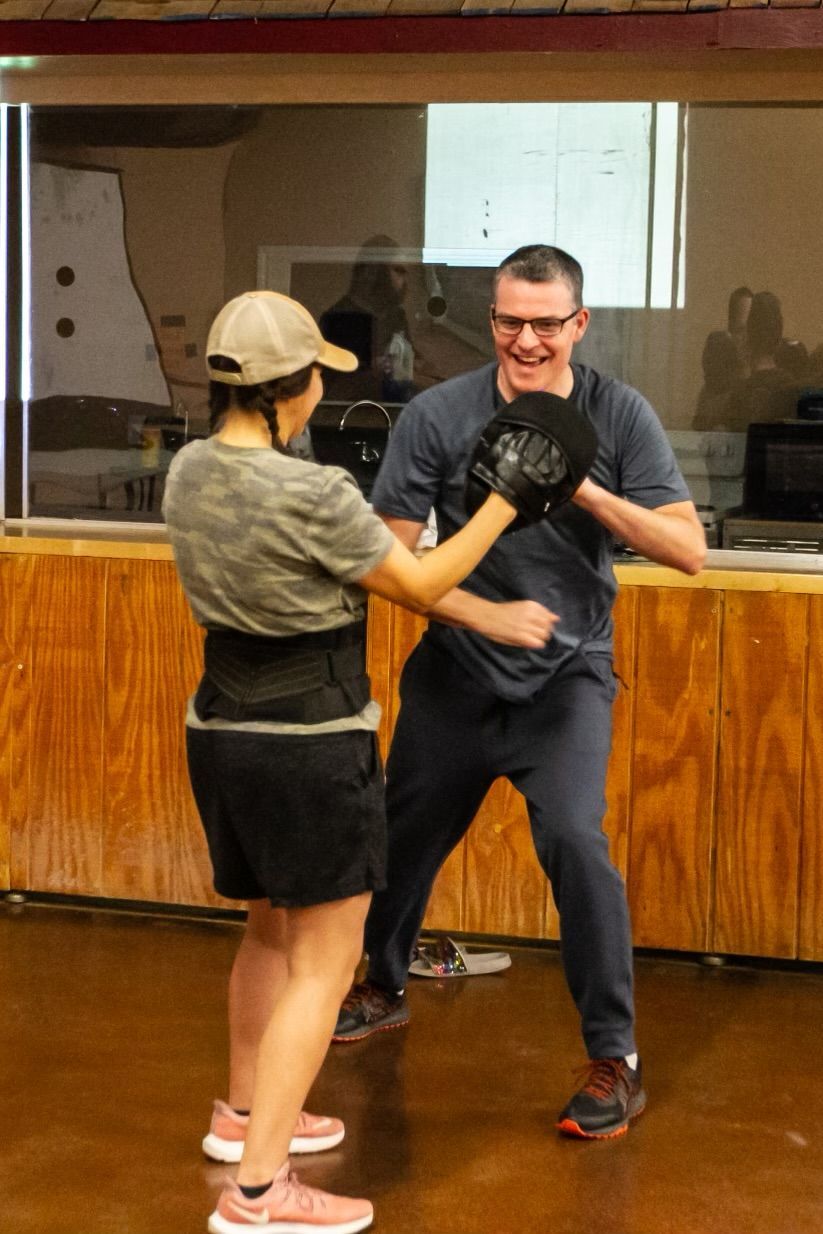
Krav Maga gives you simple, pressure-tested tools you can actually use when things get fast and messy.
Starting Krav maga as a beginner in Lindale should feel straightforward, not intimidating or confusing. Our job is to give you practical skills first, then layer in timing, control, and confidence as you train. You do not need an athletic background to begin, but you do need a plan that makes sense and keeps you progressing.
Krav maga is built around real-world problems: surprise grabs, close-range strikes, threats in tight spaces, and the stress that makes fine motor skills disappear. That is why our beginner curriculum focuses on simple movements, repeatable habits, and realistic decision-making. In a small town like Lindale, where you may be at a gas pump, walking to your vehicle after a game, or working late, training is less about trophies and more about being prepared.
We also take safety seriously. A 2023 to 2024 study of 109 Krav Maga athletes reported 65 injuries, mostly acute, with common trouble spots in the lower limbs and torso. That is useful information because it reminds us to scale intensity, strengthen the right areas, and avoid rushing the process. You can train hard and still train smart, and we structure our sessions so beginners can build durability over time.
Why Krav Maga works for Lindale beginners
Krav maga is direct by design. Instead of memorizing long sequences, we focus on a small number of core tools that show up again and again. Beginners tend to make the fastest progress when the training connects to clear situations, and that is exactly how we teach.
Lindale is close to Tyler and surrounded by rural and suburban areas where daily life includes parking lots, storefronts, open spaces, and the occasional isolated moment. Practical self-defense has to work in regular clothes, in tight ranges, and under stress. Our approach keeps that reality front and center, so you learn how to move, strike, escape, and create time to get safe.
Krav maga also fits the bigger trend: martial arts participation keeps growing because people want fitness and self-defense in one place. Women now make up about 30 percent of participants in many martial arts settings, and families are training more often, too. We build our program to welcome that mix, with an emphasis on skills that scale for different sizes, strengths, and goals.
What you will actually learn first
Beginners sometimes expect fancy techniques. We start with the fundamentals that keep you stable and functional, even when your heart rate jumps. The early wins come from building a few reliable defaults.
Stance, movement, and base
Before striking, you need balance. We teach a stance that protects you while still letting you move quickly. You will practice stepping forward, back, and at angles, because self-defense is rarely straight lines. When your feet are organized, your hands and eyes can work better.
We also teach simple guard positions that protect your head without freezing your shoulders. You will feel awkward for a week or two, then it clicks. That is normal.
High-percentage strikes you can repeat
Krav maga favors strikes that are simple, direct, and hard to miss. You will work palm strikes, elbows, knees, and basic punches, with a strong emphasis on protecting your hands and keeping your body connected. We care about where the strike lands, but we care even more about whether you can throw it while moving and while tired.
Power comes from alignment and timing, not from being naturally strong. We coach mechanics closely so you build good habits early.
360 defense and common incoming attacks
One of the signature beginner concepts is defending fast, looping attacks from different angles. We train defenses that use your forearms and body movement together, then immediately connect to counterattacks. The goal is not to look pretty. The goal is to stop the hit, regain position, and take over the moment.
This is also where beginners start learning an important idea: defense without a follow-up is incomplete. In our training, you learn to defend and respond as one connected action.
Escapes that matter: grabs, holds, and chokes
A lot of self-defense situations begin with contact, not a boxing match. Someone grabs your wrist, pins your arms, or crowds your space. Beginners do well here because the techniques are conceptually simple, but they require repetition to make them automatic.
Wrist releases and clothing grabs
We teach releases that rely on leverage and direction, not on arm strength. You will learn to move toward the weak part of the grip, clear it, and immediately create distance or counter. We also train what to do when someone grabs clothing, because that is common and often overlooked.
You will practice these slowly first, then add pace. That progression is where safety and learning live.
Front chokes and pressure up close
Chokes create panic quickly, which is why we train them in a structured way. You will learn how to protect your airway, drive your body position, and counter with gross-motor strikes that you can still access under stress. We also teach how to recognize pre-contact cues, like the way someone closes distance or squares up, so you can act earlier.
We keep the training controlled, especially for beginners. The point is confidence and competence, not proving toughness on day one.
Ground basics without turning it into a sport
Even if you never want to fight on the ground, you should know how to survive there. Slips, trips, or being tackled can happen fast. Our ground portion focuses on getting back up, protecting your head, and dealing with immediate threats at close range.
We teach technical stand-ups, basic defenses from common positions, and how to create space with your legs. You will also learn to strike effectively from the ground, because self-defense does not pause just because you are down.
This part of training often surprises people. It is challenging, yes, but it is also empowering because you stop feeling helpless in a position that used to feel unfamiliar.
Training under stress: the missing piece for most beginners
Knowing a technique is not the same as using it under pressure. That is why we include controlled stress drills once you have the basics. The goal is not chaos. The goal is learning how your body reacts and training through it.
Stress drills can include loud pad work, timed rounds, and scenario-based movements where you must decide, act, and recover. When we add intensity, we do it gradually. The injury data matters here: higher intensity is linked to more injuries, and we would rather see you train consistently for months than get sidelined in week three.
We also talk about the mental side: awareness, boundaries, and de-escalation. Krav maga includes physical skills, but your best win is avoiding the fight entirely when you can.
How we keep beginners safe while still progressing
Safety is not just rules on a wall. It is coaching, class structure, and smart pacing. The same study that highlighted injury patterns in Krav Maga athletes also points to prevention strategies like strength training and tailored intensity. We build that into the way we teach.
Here are the safety habits we emphasize early:
• We warm up with purpose, especially hips, ankles, and knees, because lower-limb injuries are common when people move explosively without preparation
• We scale intensity by experience level, so you can build timing and mechanics before adding speed
• We coach striking form to reduce hand and wrist issues, using pads and controlled contact to build confidence
• We include basic strength and stability ideas that support the torso and legs, which helps with both performance and injury prevention
• We encourage recovery: hydration, sleep, and rest days matter more than most beginners expect
If you have old injuries, we adjust. If you are brand new to training, we guide you through the learning curve. The goal is steady improvement you can feel in daily life.
What to expect in your first month of Krav Maga training in Lindale
Beginners usually want to know what the timeline looks like. While everyone adapts differently, most students experience a similar arc: early coordination work, then a confidence jump as the basics start working together.
A simple, realistic approach is training one to two times per week at moderate intensity for the first month. That gives your joints and muscles time to adapt, and it helps you retain skills without feeling wrecked. As your conditioning improves, adding a third day can make sense, especially if your goal includes fitness.
This is also where many people notice non-technical benefits: better posture, improved cardio, and a calmer reaction to stress. Teens and families often report health benefits from consistent training, and we see that in class when students start moving with more control and less hesitation.
Our beginner progression, clearly laid out
We keep the learning path organized so you always know what you are building and why. Here is a typical progression we use for krav maga training in Lindale:
1. Weeks 1 to 4: stance, movement, palm strikes, basic defenses, and simple escapes with careful form checks
2. Weeks 5 to 8: combining defenses with counterattacks, intro ground survival, and increasing round structure for conditioning
3. Ongoing: scenario training, multiple-attacker concepts, higher-paced drills, and skill refinement based on your goals
That structure keeps beginners from feeling lost. You learn a core set of tools, then learn how to apply them under realistic pressure.
Finding the right rhythm with the class schedule
Consistency beats intensity for most beginners. When you check the class schedule, look for times you can commit to without rushing. Showing up slightly tired from work is normal. Showing up so stressed you cannot focus is not helpful, so build a routine that supports you.
We also recommend arriving a little early for your first few sessions. That gives you time to wrap hands if needed, ask questions, and settle in. Training goes better when you are not sprinting from the parking lot straight into drills.
If your goal is self-defense first, pick two classes you can attend reliably. If your goal is fitness plus self-defense, add a third day once your recovery feels steady.
Common beginner questions we hear in Lindale
Is Krav Maga safe for beginners?
Yes, when training is progressive and coached well. Like any contact system, risk goes up when intensity rises too fast. We focus on smart warm-ups, controlled drilling, and gradual increases in pressure so you build skill and durability together.
Do I need to be in shape before I start?
No. Getting in shape is part of the process. You will build cardio and strength through training, and we scale drills so you can work at your level while still being challenged.
Are there options for women and families?
Yes. Demand for women-focused and family training has grown in recent years, and we teach in a way that supports different body types, experience levels, and goals. Self-defense is not one-size-fits-all, so our coaching is not either.
What should I bring?
Comfortable training clothes, water, and an open mind. As you continue, we may recommend basic protective gear like a mouthguard and gloves depending on the drills in your sessions.
Take the Next Step
Building real skills in Krav Maga comes down to repetition, good coaching, and a plan you can stick with. When you train consistently, the techniques stop feeling like moves you remember and start feeling like habits you own, and that is when confidence becomes practical.
If you are ready for krav maga classes Lindale beginners can grow into, we would love to help you get started at Agoge Krav Maga. Our training environment is focused, welcoming, and built around real-world self-defense with smart progression so you can improve without burning out.
New to Krav Maga? Start your self-defense journey by joining a class at Agoge Krav Maga.