Krav Maga turns everyday movement into usable power, faster feet, and calm focus under pressure.
If you want to get stronger and move better, you do not necessarily need complicated machines or a perfect “fitness background.” You need training that asks your whole body to work together: legs driving, core bracing, hands striking, eyes tracking, and lungs keeping up. That is one reason we love krav maga as a fitness system as much as a self-defense method.
In our Lindale classes, we see every starting point: people who have not exercised in years, athletes who want more functional conditioning, parents juggling schedules, and teens who need confidence and coordination. The common thread is simple. When you train consistently, your strength and agility improve in ways you can feel in daily life: carrying, lifting, sprinting, turning, reacting, and staying balanced when things get messy.
This article breaks down exactly how krav maga builds strength and agility for every fitness level, what you can expect in training, and how we scale the work so you progress safely without feeling lost or overwhelmed.
Why strength and agility matter more than “looking fit”
A lot of workouts chase appearance. Our focus is performance you can use. Strength is not only about heavy lifting. It is the ability to produce force with control, repeatedly, and in awkward positions. Agility is not just speed. It is the ability to start, stop, change direction, and react quickly while staying balanced.
Krav maga naturally blends these qualities because it demands full-body action under real constraints. You are not doing a perfect rep in a quiet corner. You are moving, striking, defending, and resetting. That constant problem-solving is where functional strength and usable agility come from.
In practice, this means your training can support goals like fat loss, better posture, less back stiffness, improved cardio, and more confidence moving through the world. Those are big wins, and you do not have to be “in shape” first to earn them.
How krav maga builds strength without lifting weights
You can build serious strength with bodyweight and partner resistance when the movements are intense, technical, and repeated with purpose. In krav maga, strikes, defenses, and drills require your muscles to work as connected chains, not isolated parts.
Full-body striking creates real power
Punches and kicks are not just arm and leg exercises. When we teach you to strike correctly, you learn to drive from the floor, rotate through the hips, stabilize through the core, and finish with tight mechanics. Over time, your body adapts by building stronger legs, glutes, back, shoulders, and trunk.
You also build “snap” strength, that quick explosive power that shows up when you need to accelerate, push, or pop up from the ground. It is different from slow strength, and it is a big part of why this training feels so energizing.
Core strength shows up in every drill
In our krav maga training in Lindale, core work is not treated like an add-on at the end. Your core is active in almost everything: bracing during strikes, resisting pulls in partner drills, getting up from the ground, and maintaining balance during footwork. The result is a midsection that is not only tighter, but more functional.
Many students notice this in everyday moments: less wobble when stepping off a curb, more stability lifting groceries, and fewer “tweaks” when turning quickly. It is the quiet kind of strength that keeps you durable.
Conditioning and strength grow together
Traditional strength programs often separate cardio and lifting. Krav maga blends them. Because rounds can be fast and demanding, you develop muscular endurance and cardiovascular capacity at the same time. That combination is a major reason people report visible changes within a few weeks of consistent attendance.
If you want a practical benchmark, many people do well with 45 to 60 minute sessions, 2 to 3 times per week. More can be great, but consistency beats intensity spikes that leave you sore for a week.
How krav maga develops agility, reflexes, and coordination
Agility is trainable. It improves when your nervous system gets better at processing information and your body gets better at responding. Krav maga accelerates that learning because you practice movement with feedback: from an instructor, from a partner, and from your own timing.
Footwork and positioning train fast direction changes
We spend time on stance, movement, and angles because staying balanced is the foundation for speed. You learn how to shift weight without crossing your feet, how to move in and out safely, and how to reset quickly. That is agility in a very real sense: you are building fast feet that stay under control.
Even beginners feel this improvement quickly. At first, movement can feel clunky. Then one day it clicks, and you notice you are turning cleaner, stepping lighter, and reacting sooner. It is a good feeling.
Reaction time improves through structured pressure
We do not throw you into chaos. We build reaction skills in layers. You learn the technique, then add timing, then add decision-making, then add a little stress. That progression matters because agility under pressure is different from agility in a calm environment.
As your reaction time improves, you also gain confidence. Not a loud kind of confidence. More like, “I can handle this.” That mental steadiness is part of agility too.
Flexibility and mobility get better as a byproduct
Kicks, knees, defensive movement, and getting up from the ground require hips and ankles that move well. We incorporate warmups and drilling that naturally open those areas over time. You do not need to be flexible to start. You get more flexible because you show up and move.
What a typical class feels like (and why it works)
Most people are curious about intensity. The honest answer is: it depends on you, and we like it that way. Our sessions are designed to challenge you while still letting you learn, and we scale the pace so you can build up safely.
A typical class usually includes:
• A warmup that raises your heart rate and prepares your joints for movement, including light footwork and mobility work
• Technique instruction where we break down strikes, defenses, and movement mechanics so you feel what “correct” is
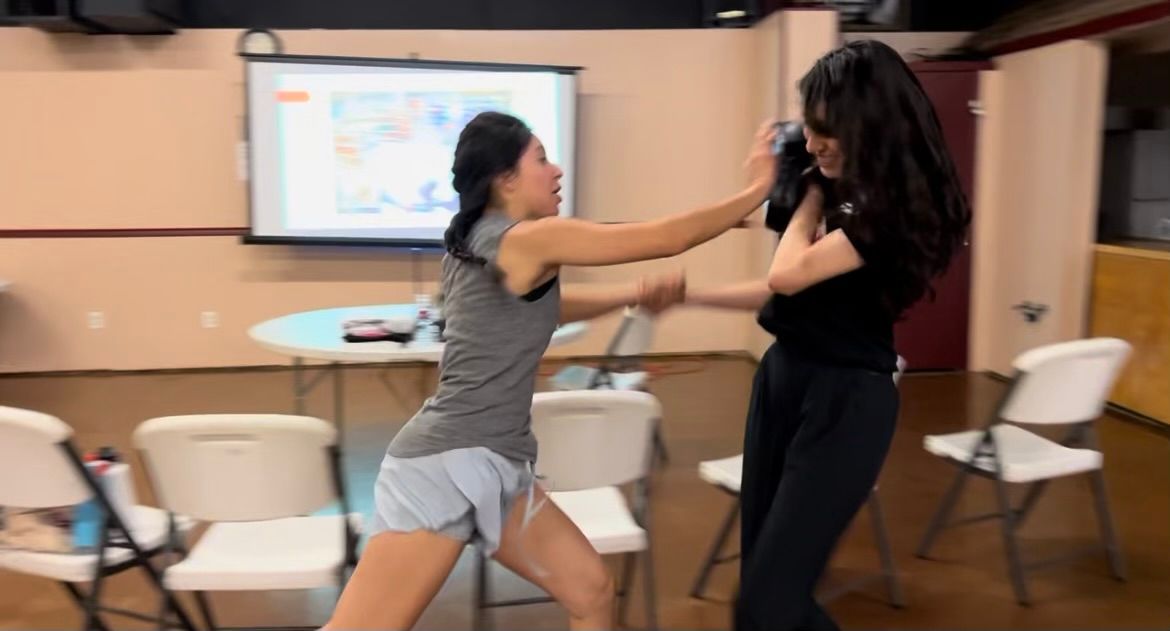
• Partner drills that add timing and resistance in a controlled way, so you build strength and coordination without guessing
• Conditioning rounds that feel a lot like HIIT, using combinations of striking, sprawls, get-ups, or movement patterns
• A cool down that helps you recover, breathe, and leave feeling worked but not wrecked
This structure is why krav maga classes Lindale students stick with can produce results. You are not just burning calories. You are learning skills while your body adapts.
Scaling the training for every fitness level
One of the best parts of krav maga is that the same drill can train a beginner and an advanced student at the same time, without anyone being left behind. We scale intensity by adjusting speed, complexity, range, and resistance.
Here are a few ways we help you train at the right level without losing the purpose of the workout:
• We adjust the pace of rounds so you can keep good technique, because sloppy reps teach sloppy habits
• We give options for impact, including using pads and controlled contact, so your body adapts gradually
• We build progressions, starting with fundamentals and adding variables only when you are ready
• We encourage rest with intention, because smart recovery keeps your training consistent week to week
• We coach breathing and posture, since fatigue often shows up there first and fixes there pay off fast
If you are brand new, your first goal is simple: show up, learn the basics, and leave feeling successful. If you are already fit, we will challenge your timing, speed, and output so you keep progressing.
Strength and agility benefits you can expect in the first 1 to 3 months
Results vary, but patterns are common when you train consistently. In the first few weeks, many people notice soreness in “new” places: hips, upper back, and core. That is normal, and it usually settles as your body adapts.
Within 1 to 3 months, students commonly report:
1. Better endurance, including less breathlessness during daily tasks and more stamina during rounds
2. Stronger posture and core control, especially during movement and lifting
3. Faster footwork and improved balance when changing direction
4. More explosive power in strikes and overall athletic movement
5. Greater confidence under pressure, because your reactions are trained, not imagined
This is also where weight loss can show up if you pair training with solid nutrition and sleep. We are direct about that: recovery matters. Training is the spark, but recovery is the fuel.
Mental agility: the piece most workouts miss
Physical agility is visible. Mental agility is what helps you make decisions quickly when your heart rate is up. Krav maga is built around practical scenarios, so you learn how to manage distance, identify openings, and respond decisively.
That training builds resilience. You practice staying focused while tired. You practice resetting after mistakes. You practice doing the next right thing. For teens, that can translate into confidence and better self-control. For adults, it often shows up as stress relief. After a hard session, your mind tends to quiet down. It is not magic, but it is real.
Training for teens and families in Lindale
We work with a community that includes families, busy professionals, and students balancing school and sports. Our approach supports those realities. Training can build coordination and strength for teens who are still growing, and it can give parents a structured outlet that feels productive, not monotonous.
For younger students and teens, we emphasize:
• Strong fundamentals, including stance, movement, and basic strikes
• Safe partner work that builds control and respect
• Confidence through competence, so progress is earned and measurable
• Focus and follow-through, because learning skills requires attention
For adults, we often focus on consistency, stress management, and staying injury-free so training becomes a long-term habit, not a short burst.
Take the Next Step
Building strength and agility is not about proving something on day one. It is about stacking weeks of solid work, learning efficient movement, and letting your body adapt in a way that lasts. That is exactly what we coach, and it is why krav maga works so well for beginners and experienced athletes alike.
When you are ready to train in a supportive, challenging environment, Agoge Krav Maga in Lindale, TX is here to help you build real fitness you can use. If you want to see how our classes fit your schedule and your current level, the website makes it easy to explore next steps.
Take your next step in training by signing up for a free Krav Maga trial class at Agoge Krav Maga.