Your first class should feel practical, welcoming, and clear, so you leave knowing exactly what to do next.
Walking into your first self-defense session can feel like a big step, even if you are excited. Most beginners in Lindale tell us they are not worried about learning techniques as much as they are worried about looking out of place, keeping up physically, or not knowing the rules.
Our goal in our krav maga classes is simple: give you a beginner-friendly experience that still feels real. You will learn practical fundamentals from day one, train safely with partners, and build confidence through repetition instead of pressure.
This guide breaks down what to expect in your first class, what to wear, how the training works, and how to get the most out of your first few weeks of krav maga training in Lindale.
Why our krav maga classes start with real-world priorities
Krav Maga is designed for efficiency, not trophies. That matters because when you are brand new, you do not need complicated sequences or traditions you have to memorize before you can participate. You need a few strong building blocks that work under stress.
Our training emphasizes simple, direct movement patterns that hold up when your heart rate is elevated. We pull from striking and grappling systems like Boxing, Muay Thai, Judo, Greco-Roman Wrestling, Jiu-Jitsu, and even Lethwei concepts, but we keep the focus on self-defense outcomes rather than sport rules.
In Lindale and the surrounding areas, many people are looking for a mix of personal safety, functional fitness, and community. We design our krav maga classes to meet those needs without making you feel like you have to already be an athlete to start.
Before you arrive: how to prepare for your first class
A good first class starts before you step on the floor. A little preparation helps you relax and actually absorb what we teach instead of worrying about details.
What to wear (and what to leave at home)
Wear comfortable athletic clothing that you can move in, plus athletic shoes. You do not need special gear for a first session, and you do not need to show up looking like a fighter.
Avoid anything that can snag, scratch, or get in the way:
- Jewelry, including rings, watches, necklaces, and hoop earrings
- Clothing with sharp zippers or hard buckles
- Heavy fragrance, since close-range partner drills are part of training
- Long, untrimmed nails, which can accidentally cut a partner during contact drills
Bring water. If you have hand wraps or gloves already, you can bring them, but we will guide you either way.
Arrive a little early
Plan to arrive about 15 minutes early. That gives you time to find the space, meet our coaching team, and get a quick orientation so you are not rushing or trying to guess what happens next. If you have questions about injuries, fitness limitations, or nerves, this is a great time to mention them quietly and get a straightforward plan.
A first-class walkthrough: the typical timeline
Beginners like knowing what the hour will look like. While each session varies a bit, most first krav maga classes follow a familiar rhythm.
Step 1: quick orientation and safety expectations
We start by making sure you understand how to train safely. You will hear us talk about control, communication, and respect for partners. That is not just etiquette. It is what lets you train hard without unnecessary injuries.
We also clarify one important idea early: you are not expected to be perfect. You are expected to be attentive, coachable, and consistent.
Step 2: warm-up that supports self-defense movement
Our warm-ups are practical. You can expect light cardio and movement preparation that connects to what you will do in drills, not random exhaustion for its own sake. We often include footwork patterns, basic stance work, and bodyweight movements to wake up the hips, shoulders, and core.
You might feel a little awkward at first, and that is normal. A warm-up is where you start learning how our movement system feels.
Step 3: learning core strikes and defenses
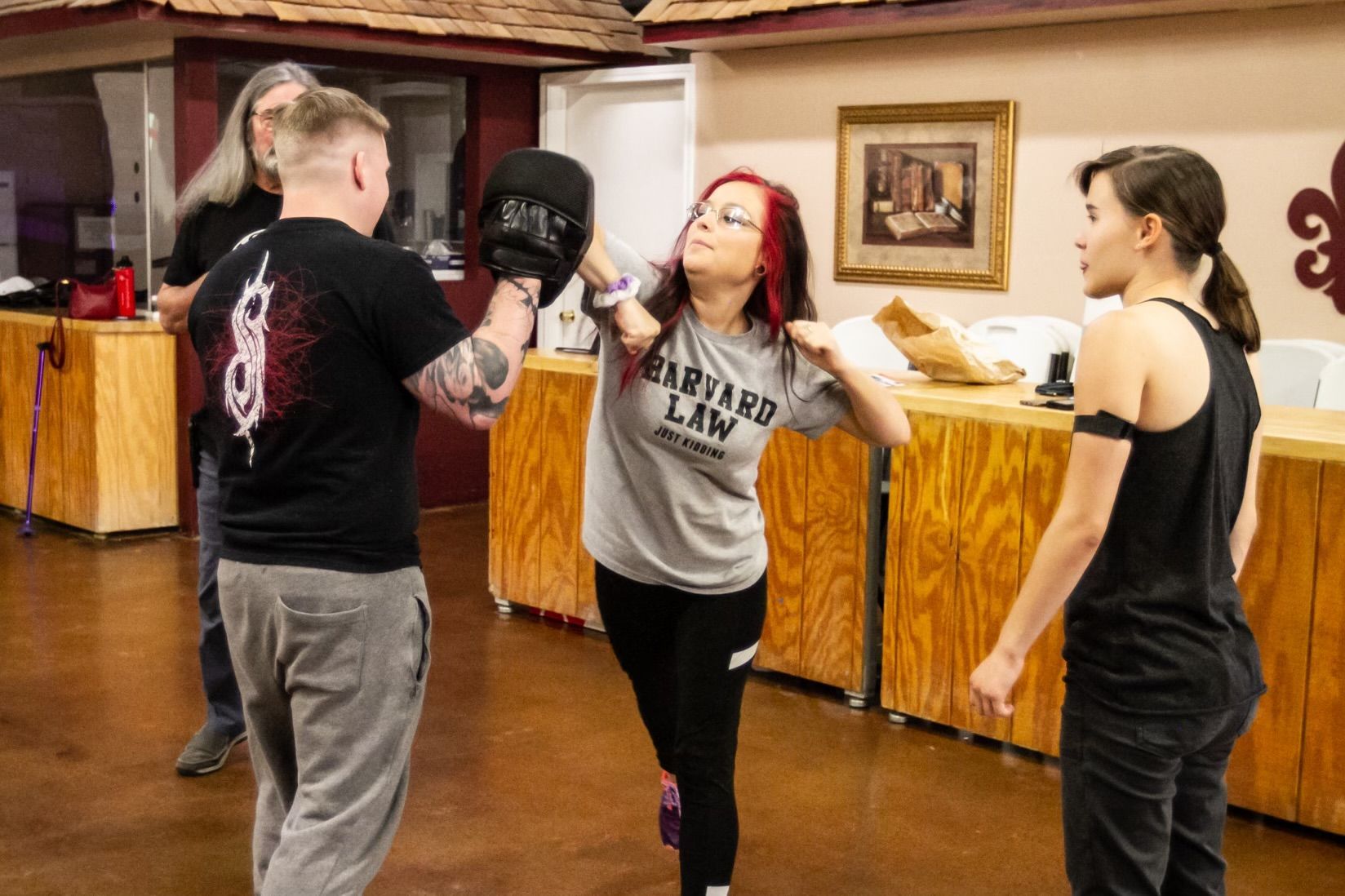
From day one, our krav maga classes teach fundamental striking and defensive concepts. Depending on the lesson plan, you may work on straight punches, palm strikes, elbows, knees, or kicks, along with how to keep your balance and protect yourself while moving.
We teach in a way that makes sense for beginners: short demonstrations, clear coaching cues, and immediate practice. Expect us to correct small details like hand position, chin tuck, and foot placement. Those details are what make techniques safer and more effective.
Step 4: partner drills and controlled pressure
Partner work is where techniques start to feel real. We keep it controlled and beginner-appropriate, but you will still experience timing, distance, and resistance in a safe way. That is how you learn to apply skills, not just understand them.
You will hear us remind you to communicate with your partner. If something feels too intense, you can say so. A good class is challenging, not overwhelming.
Step 5: scenario-based elements, awareness, and de-escalation
Self-defense is not only physical. We build habits around situational awareness and decision-making, including how to recognize problems earlier and how to use verbal boundaries when appropriate.
We also teach practical defenses for real threats, including edged weapons, blunt objects, and firearms concepts, approached responsibly and progressively. Beginners are often surprised that we address these topics early, but we do it with a clear safety framework and realistic expectations.
Step 6: conditioning and cool-down
Most sessions include a short conditioning block. Think functional fitness: simple, repeatable work that supports endurance, strength, and coordination. You do not need to be in shape to start, but training will help you get in shape if you keep showing up.
We finish with a brief cool-down and a moment to ask questions. That post-class window matters, because it is when beginners usually connect the dots and leave feeling grounded.
What you will learn in your first few weeks
Your first class is an introduction. Your first month is where confidence starts to build because repetition makes things feel familiar.
In our krav maga training in Lindale, beginners typically work through:
- Stance, movement, and distance management so you can stay balanced under pressure
- Fundamental strikes like punches, elbows, knees, and low kicks built for self-defense
- Basic clinch and standing control concepts to manage close-range chaos
- Escapes from common grabs and holds, practiced safely with partners
- Ground survival basics, including getting up quickly and protecting yourself
- Awareness, boundary-setting, and de-escalation habits you can use immediately
You will not learn everything at once, and you should not try to. Progress comes from stacking small wins. A clean stance and one reliable strike done well beats a long list of half-learned techniques.
How hard is it, really? What beginners in Lindale notice first
Most people feel two things after their first session: tired and relieved. Tired because training uses your whole body and your brain. Relieved because the room is usually more welcoming than they expected.
Intensity is adjustable. You can scale pace and power while still learning the same material. If you are returning to fitness after time off, we will help you build capacity without burning out in week one.
Also, you will probably sweat more than you think. Bring water, and if you can, have a small towel in your car. That little detail makes the drive home nicer.
Training frequency: how often should you come?
For most beginners, training 2 to 3 times per week is the sweet spot. It is frequent enough to build skill and conditioning, but not so frequent that soreness or schedule stress becomes the reason you quit.
If you can only make it once a week at first, we would rather you start and stay consistent than wait for a perfect schedule that never arrives. Consistency beats intensity, especially in the first month of krav maga classes.
Beginner mindset: what matters more than being tough
Self-defense training changes you fastest when you treat it like practice, not performance. Your job is not to win the room. Your job is to learn.
A few mindset points we coach often:
- Focus on clean basics before speed
- Ask questions when something does not click
- Train with control so you and your partners stay safe
- Expect discomfort, but do not chase pain
- Track progress in weeks, not days
You will have moments where a technique feels clumsy. Then, suddenly, it starts working. That is normal, and honestly, that is the fun part.
Frequently asked questions about starting
Do I need experience to join?
No. Our krav maga classes are designed so beginners can jump in without prior martial arts or fitness background. We coach fundamentals constantly, not just once.
Will I have to spar?
We use controlled drills and progressive pressure, but beginners are not thrown into unsafe situations. We introduce intensity in a way that supports learning.
What if I am not in shape yet?
That is common. Our sessions build fitness while teaching self-defense, and we help you scale intensity. Start where you are and let training do its job.
Is this appropriate for families?
Yes. We welcome a wide range of ages and body types, and many families in the Lindale area train to build confidence, discipline, and practical safety habits together.
Are weapons defenses really covered?
Yes. We cover defenses related to knives, blunt weapons, and firearms as part of our real-world curriculum, taught with safety, responsibility, and progressive structure.
Ready to Begin
Building self-defense skill is not about becoming a different person overnight. It is about learning a few reliable tools, practicing them under realistic pressure, and developing the awareness to avoid trouble when you can. That is exactly what we aim to deliver in every class, especially for beginners in Lindale who want a clear path forward.
At Agoge Krav Maga, we keep the first experience simple, safe, and practical, so you can walk out of your first session knowing what you learned and what to work on next. If you are ready to try krav maga in Lindale, we would be glad to train with you.
New to Krav Maga? Start with a free trial class and experience training designed for real life.