The fastest way to feel confident about training is to separate what’s real from what you’ve only heard.
If you’ve been searching for krav maga in Lindale, you’ve probably noticed something: there’s a lot of strong opinions online, and not all of them match what actually happens in a good class. We talk with beginners all the time who are excited to start, but also a little unsure about what they’re walking into.
That uncertainty usually comes from myths. Some myths make krav maga sound like a mysterious traditional martial art with secret rules. Other myths make it sound like you need to be a superhero, or that you can master everything in a few weekends. The truth is simpler and more useful.
In this article, we’ll break down six common misconceptions we hear from beginners around Lindale and the Tyler area, then explain what you can realistically expect from training, how to stay safe, and how to progress in a way that actually holds up under stress.
Myth 1: Krav Maga is a traditional martial art
A lot of people assume krav maga is like karate, taekwondo, or jiu-jitsu in the sense that it’s built around tradition, competition, or cultural rituals. That’s understandable, because most of what we see in movies and social media uses “martial arts” as a catch-all.
In reality, krav maga is a practical self-defense system. The goal is straightforward: help you protect yourself in real-world situations. That means our training prioritizes what works under pressure, not what looks impressive in a demo or fits a long-standing tradition.
Here’s what that changes for you as a beginner. Instead of spending months perfecting forms or memorizing sequences for performance, we focus on usable fundamentals: movement, striking basics, simple defenses, and decision-making. In Lindale, that practicality matters. You want skills you can recall when your heart rate spikes, your hands shake, and everything feels fast.
Myth 2: You can fully self-teach from YouTube
Videos can be helpful for understanding concepts. We’re not anti-video. If you watch a clip to get familiar with a stance, a basic punch, or the idea of moving off the line, that can be a decent preview.
The problem is believing video-based training equals real krav maga training. A screen can show choreography, but it can’t give you timing, distance, or that messy in-between feeling when a partner doesn’t move “like the tutorial.” And it definitely can’t correct the small things that create big problems, like dropping your hands, planting your feet, or leaning your head into danger without noticing.
Self-defense also involves stress responses. Under pressure, your judgment changes. Your fine motor control changes. Even your hearing and vision can narrow. You can’t simulate that alone in your living room, no matter how motivated you are.
In our classes, partner drills and coached feedback close those gaps. We can slow things down, then build intensity in a controlled way so you learn to make good decisions while your body is working harder. That’s where confidence comes from, not from memorizing a sequence.
Myth 3: Krav Maga is only for the strong or for military and police
This is one of the most common myths we hear, and it stops good people from training. It usually sounds like, “I’m not in shape yet,” or “I’m not aggressive,” or “I’m not built for fighting.” If that’s you, we understand the hesitation.
Krav maga was designed around simple, direct movements and natural reactions. That’s a big reason it works for civilians. We don’t rely on athleticism alone. We build skills around leverage, positioning, awareness, and committing to an escape when it matters.
Yes, strength and conditioning help. But they are not the entry ticket. Our job is to meet you where you are and build you up from there. For many Lindale beginners, the first breakthrough is realizing you don’t need to become someone else to train. You just need a plan, repetition, and a safe environment to practice.
What beginners actually need to start (and what helps most)
If you’re wondering whether you’re “ready,” these are the practical things that matter:
• Consistency over intensity, because training twice a week beats going hard once and disappearing for a month
• Coachable mindset, since small corrections early prevent bad habits later
• Basic mobility and balance, which we develop through warmups and drills, not perfection on day one
• Willingness to practice with partners safely, because real skill comes from real interaction
• Patience with your nervous system, because learning under stress is a process, not a switch
If you can show up and work, you can learn.
Myth 4: You’ll master Krav Maga in a few weeks
Krav maga has a reputation for being “quick to learn,” and that gets twisted into “quick to master.” The truth is that beginner techniques are intentionally straightforward, but performing them reliably under pressure takes time.
Think of it like this: it’s one thing to understand a defense when you’re calm. It’s another thing to do it when you’re surprised, off-balance, and your brain is trying to catch up. Real self-defense is not a quiet environment with perfect timing.
We build progress through repetition and pressure-testing, step by step. You’ll learn fundamentals first, then you’ll revisit them with increasing realism: different partners, different angles, more movement, and more decision-making. That’s how muscle memory forms, and muscle memory is what shows up when you’re stressed.
If you stick with krav maga training in Lindale consistently, you’ll feel improvements sooner than you might expect: better posture, faster reactions, more awareness in public spaces. But “mastery” is a long game, and we’re honest about that because honesty keeps you safer.
Myth 5: Krav Maga is too aggressive or dangerous for civilians
Krav maga is direct. It’s meant to work. So yes, there’s an edge to it. But “effective” is not the same as “reckless,” and good training is not a brawl.
In civilian self-defense, we’re not looking for punishment or bravado. We’re looking for options. That includes avoiding trouble, leaving early, using your voice, using barriers, and making fast choices that reduce risk. Physical techniques are part of the toolkit, not the whole story.
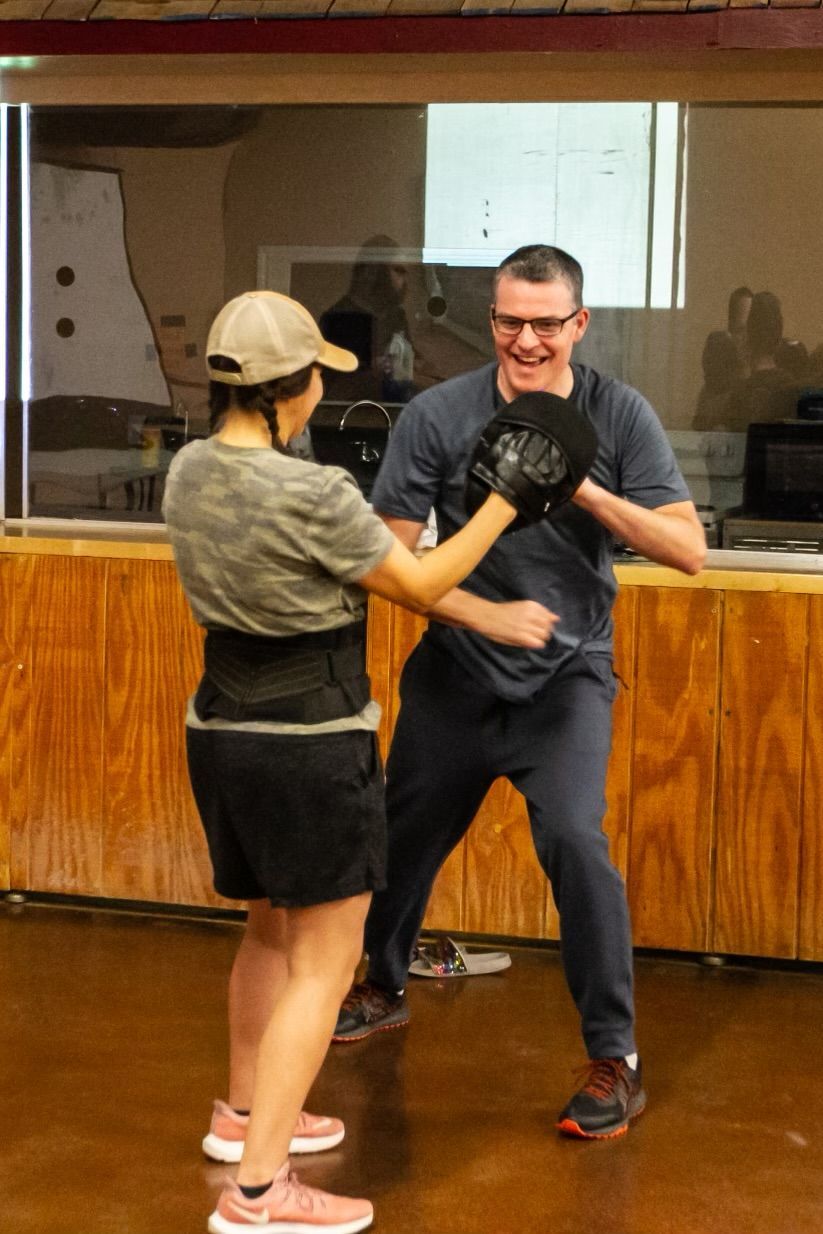
Safety in training matters, too. We control intensity, we build skills progressively, and we keep partner work structured. Beginners learn how to strike safely, how to hold pads safely, and how to drill without escalating. You can train hard without turning the class into chaos. Frankly, that’s the point: you learn to manage intensity instead of being ruled by it.
Myth 6: Krav Maga is only about fighting, not awareness or fitness
Some people hear “self-defense” and imagine nothing but punching and kicking. Others assume it’s purely tactical and has nothing to do with getting in better shape. Both miss what modern training actually looks like.
Krav maga is a full package: awareness, avoidance, de-escalation, movement, striking, and escape. We talk about recognizing pre-incident cues, managing distance, and using everyday surroundings. That’s real-world self-defense, especially for civilians who want to stay out of legal and physical danger whenever possible.
At the same time, training is physically demanding in a useful way. You’re moving, reacting, getting up and down, striking pads, and drilling with purpose. Many students come in wanting self-defense and end up surprised by the fitness benefits: improved conditioning, stronger legs and core, better coordination, and a kind of practical stamina that carries into everyday life.
How we structure beginner-friendly training so it actually sticks
To keep training practical and approachable, we focus on a progression you can feel:
1. Learn the movement slowly, with clear coaching and simple goals
2. Add timing and distance, so the technique matches real space and real speed
3. Practice with cooperative partners first, then introduce resistance in small steps
4. Layer in scenarios, because context changes what the right choice looks like
5. Pressure-test safely, so you build confidence without getting injured
This approach keeps you learning, not guessing. And it helps you build the kind of calm, capable mindset most people are really after when they search for krav maga.
Ready to Begin
The biggest myths about self-defense training tend to push you toward extremes: either you think you can do everything alone, or you think you’re not the “type” who can do it at all. The reality is more grounded. With the right coaching, a smart progression, and consistent practice, krav maga becomes a practical skill set you can carry into daily life in Lindale.
That’s exactly how we run things at Agoge Krav Maga: realistic training, beginner-friendly structure, and a focus on decision-making under stress, not just collecting techniques. If you’re ready to start, we’ll help you take the first step without overcomplicating it.
New to Krav Maga? A free trial class at Agoge Krav Maga is the perfect way to begin your journey.